Container shipping entered July 2026 riding a ten-week freight rate rally. Then the Strait of Hormuz blew up, and the math changed overnight.
On July 11, the Shanghai Containerized Freight Index (SCFI) posted its first decline after ten consecutive weeks of gains — down 4.3% to 3,184.83 points. Spot rates to the US West Coast fell 6.2% to 6,219/FEU. US East Coast dropped 2.0% to8,134/FEU. Europe dipped 2.5% to $3,332/TEU.
A normal seasonal softening? Look closer. The real story is what happened in the Persian Gulf at the same time.
The Hormuz Shock
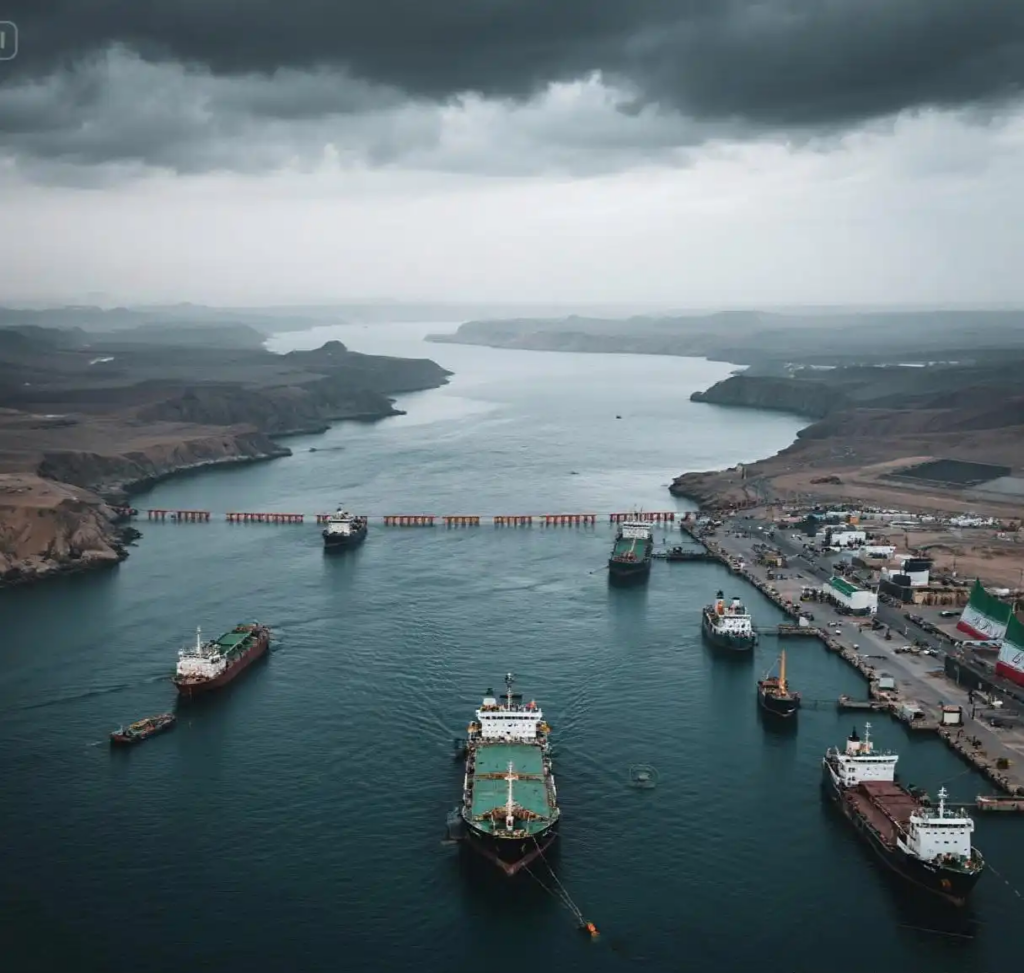
On July 12, Iran’s Islamic Revolutionary Guard Corps declared the Strait of Hormuz — the conduit for 20% of the world’s seaborne oil — “indefinitely closed.” The US struck back with airstrikes on three consecutive nights, hitting Iran’s southern coastal provinces, radar installations, and missile launch sites. By July 14, the US Navy announced a full maritime blockade of all Iranian ports, effective 20:00 GMT.
Brent crude surged 9.5% to 83.25/bbl. WTI hit78. NYMEX fuel oil — the benchmark for bunker fuel futures — jumped from 3.66/gallon on July 13 to3.91/gallon on July 15. On-the-ground bunker prices in Chinese ports already reflect the stress: 180CST fuel oil ranges from 5,650 to 6,480 yuan/ton ( 780–895/ton) depending on the port, with Tianjin and Qingdao commanding the highest premiums.
This is not a minor cost blip. Bunker fuel accounts for 30–50% of a container line’s voyage costs. A $10+/bbl crude spike in a matter of days — sustained by active military conflict — rewrites the cost structure of every vessel transiting Asia-Europe, transpacific, and Middle East trades.
Two Forces, One Squeeze
Here’s the uncomfortable math carriers are facing right now:
→ Force 1: Spot rates are falling. The pre-peak-season demand surge that drove SCFI from ~2,200 in April to 3,327 in early July was powered by front-loading — importers rushed orders ahead of the US-China tariff window (the 90-day Geneva pause, now up for Stockholm renegotiation) and the July 1 EU de minimis elimination. That pull-forward created its own gravity: the demand was borrowed from Q4, and the hangover is here.
→ Force 2: Bunker costs are spiking. Every barrel of Brent above 75 adds roughly50–70 per TEU in fuel costs on a typical Asia-Europe sailing. At 83 Brent and climbing, that’s a margin hit of100–150 per box — eating into operating profits that were already thinning as spot rates recede.
The CCFI Divergence Tells the Real Story
The China Containerized Freight Index (CCFI) actually rose 3.4% to 1,873.15 in the same week the SCFI fell. Why the divergence? The CCFI reflects contracted (long-term) rates, not spot. This reveals a market splitting in two: shippers who locked in contracts earlier in the year are insulated — for now. Those exposed to spot market pricing are paying peak rates on one leg and seeing fuel surcharges pile up on the other.
This two-speed market is exactly where logistics buyers need to act. If you’re still booking spot on major tradelanes in Q3 2026, you’re paying for both fuel volatility and market uncertainty.
What Comes Next?
Three scenarios, ranked by probability:
1. Muddling through (50%): Hormuz disruption remains contained to bilateral strikes and shipping insurance premiums spike 2–3x on war risk zones, but global supply chains reroute rather than break. Bunker stays elevated at $75–85 Brent. SCFI continues to slide to ~2,800–3,000 by August as demand softens. Carriers absorb the margin hit through slow-steaming and blank sailings.
2. Escalation spike (30%): Full blockade persists for 4–6+ weeks, triggering IMO war risk clauses across the Arabian Sea. Oil hits 90+. Carriers impose Emergency Bunker Surcharges (EBS) of200–400/FEU across all tradelanes. The “cost push” outweighs the demand pullback, and SCFI stabilizes or rises again in late August — not from demand strength, but from supply constraints and surcharge pass-through.
3. De-escalation relief (20%): US and Iran return to talks within 2–3 weeks, prompted by Gulf state mediation. Oil dives back to $65–70. Rates continue seasonal decline to ~2,500 SCFI by September. But the de minimis shock and tariff cliff still loom in November — Q4 remains grim regardless.
Our Take
We’re leaning toward Scenario 2 with Scenario 1 as a base case. The Hormuz crisis has structural characteristics — Iran’s new leadership post-Khamenei is less predictable, and the US blockade is a maximalist stance with no easy off-ramp. For freight buyers, the window to lock in long-term contracts and hedge fuel exposure is closing. Negotiate bunker adjustment clauses now. Watch the Stockholm tariff talks this week. And plan for a Q4 that looks nothing like the spot market you’re seeing today.
Because in this market, the squeeze doesn’t discriminate — but preparation does.
Viniacargo provides end-to-end international logistics and trade solutions. For expert guidance on navigating the current market volatility, contact our team.